
When buying a property in Spain, it is very easy to fall in love with what you see at first glance. A new kitchen, freshly painted walls, stylish tiles, new furniture and a beautiful terrace can make a fantastic first impression.
The problem is that the most expensive surprises are often hidden in places buyers never think to check.
This story happened during one of our property viewings on the Costa Blanca.
I was asked to inspect the apartment before the purchase
One day, a real estate agent we work with asked me to join her and her clients to view an apartment they were considering buying.
The main idea was for me to look at the property from a technical perspective.
We met at the property.
As soon as we entered, it was clear that the apartment was located in an older building. The apartment itself, however, looked really good.
And I mean that sincerely — I liked the apartment.
It was tastefully decorated, looked renovated and made a very good first impression.
I found a few minor things that could be improved, but nothing particularly worrying.
A small correction here, some finishing work there, another detail somewhere else.
I told the clients more or less:
“This isn’t a problem. A few things can be corrected and finished properly. It shouldn’t involve major costs.”
The clients liked the apartment too.
So everything seemed to be fine.
There was, however, one more thing I wanted to check.
The electrical installation.

AI-generated
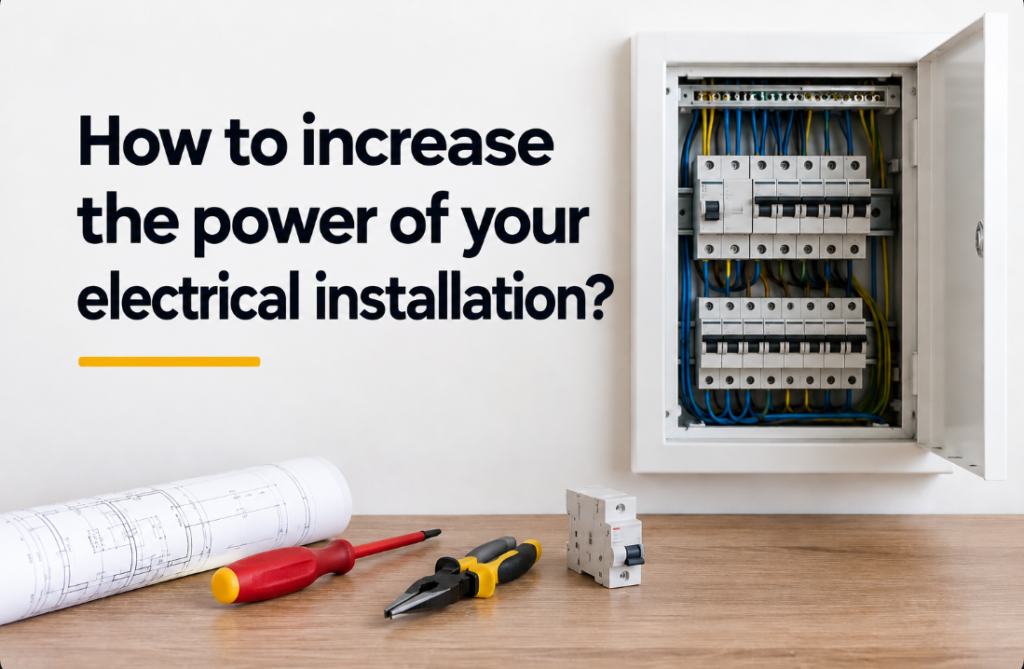
Where is the electrical panel?
I started looking for it.
And I couldn’t find it.
I checked the usual places where an electrical distribution board might be located.
Nothing.
Eventually, I looked up.
Almost directly below the ceiling was a small electrical box.
And inside it…
two circuit breakers.
At that moment, my entire view of the apartment changed.
Two circuit breakers told me more than the beautiful interior
In very old electrical installations in Spain, you can sometimes find solutions that simply do not match the energy requirements of a modern home.
As soon as I saw that box, alarm bells started ringing.
If this was the only electrical panel in the apartment — and we couldn’t find another one — everything suggested that the electrical installation had not been comprehensively replaced during the renovation.
So we could have had a beautifully renovated apartment, but with an old electrical installation hidden behind new walls, tiles and finishes.
And this is exactly where a seemingly minor issue can turn into a very serious expense.
We asked for the electrical documentation
We asked the person representing the seller to check the information regarding the electrical installation.
Among other things, we wanted to know what electrical power was available at the property and whether there was up-to-date documentation or a certificate relating to the electrical work that had been carried out.
We were told that this would be checked and that the relevant documents or information would be provided.
For me, however, the most important point was something else.
I told the client directly:
if this is the only electrical panel in the apartment, the installation needs to be checked very carefully before making a decision to buy.
Just because an apartment looks renovated does not mean that everything hidden from view has been renovated as well.
Imagine buying an apartment like this
You walk in.
New kitchen.
Beautiful bathroom.
Freshly painted walls.
Modern lighting.
Furniture.
Everything looks fantastic.
You buy the apartment and receive the keys.
Moving day arrives.
You turn on the air conditioning.
The oven.
The washing machine.
The kettle.
And suddenly the problems begin.
With a very old electrical installation, its capacity and the available electrical power may simply not be suitable for the way a modern apartment is used.
An electric kettle alone can draw around 2 kW.
Then you have the air conditioning, oven, hob, water heater, washing machine, dishwasher and all the other appliances.
Of course, without taking measurements and checking the documentation, it is impossible to say exactly what the situation was in this particular apartment.
But that is precisely why the installation needed to be checked before the purchase, not after signing the contract.
“I’ll just call an electrician and they’ll change something”
And this is where one of the biggest mistakes can happen.
A buyer may think:
“At worst, I’ll call an electrician later. They’ll change something in the panel, add a breaker and everything will be fine.”
Unfortunately, it doesn’t always work like that.
If the problem is an old installation, inadequate wiring, a lack of appropriate circuits or the way the entire installation was originally constructed, simply replacing a circuit breaker will not solve the problem.
New circuits may have to be installed.
And new circuits mean new cables.
Those cables have to go somewhere.
And that’s when the real problem begins.
A new electrical installation in a freshly renovated apartment
Now imagine this situation.
You’ve just bought a beautifully finished apartment.
And the electrician tells you:
“We basically need to redo the electrical installation.”
What could that mean?
Cutting channels into freshly finished walls. Removing parts of built-in furniture. Problems with tiles. Replastering. Filling. Painting. Repairing decorative finishes.
In other words, we start destroying exactly what we have just paid for.
In an extreme case, what appeared to be a relatively small technical issue turns into another apartment renovation.
A cosmetic renovation is not always a technical renovation
And this is something I particularly want to highlight for people looking for property on the Costa Blanca.
I don’t know who renovated this particular apartment, and I don’t want to judge their work.
I also don’t know whether the property was prepared specifically for a quick resale.
However, you can find properties on the market where a lot of money and effort has been invested in what the buyer sees during the first five minutes of a viewing.
Beautiful kitchen.
New tiles.
Trendy colours.
Lighting.
Furniture.
Decorations.
But underneath all of that there may still be installations that are several decades old.
And then you have beautiful packaging, while technically the apartment may require another substantial investment.
How much can a mistake like this cost?
Of course, this depends on the size of the apartment, the condition of the installation, the standard of the finishes and the scope of work required.
However, if after the purchase it turns out that walls need to be opened again, installations replaced and finishes restored, the costs can reach tens of thousands of euros.
With a larger scope of work, a complete apartment renovation can cost around €30,000–€35,000 or more, depending on the standard and the work required.
Now compare that with the cost of having a property inspected before buying it.
A professional inspection is usually a comparatively small expense.
A few hundred euros spent before the purchase can sometimes protect a buyer from a problem worth tens of thousands.
The most expensive things in an apartment are often invisible
When buying a property, most people naturally focus on:
location, view, terrace, kitchen, bathroom, furniture and the overall finish.
That’s completely understandable.
But someone with technical experience will also look at things the future owner may not even notice.
The electrical installation.
The distribution board.
Circuit protection.
Plumbing.
Drains.
Signs of damp.
Air conditioning.
The condition of the walls and ceilings.
The quality of the renovation work.
Because the most expensive problem isn’t always the one you can see during a property viewing.
Why it’s worth inspecting a property before buying in Spain
I’m not writing this to discourage anyone from buying property in Spain.
Quite the opposite.
There are some fantastic apartments and houses available on the Costa Blanca.
You simply need to know what you’re actually buying.
If an apartment has been renovated, it is worth asking a few simple questions:
What exactly was replaced?
Did the renovation include the electrical installation?
Was the plumbing replaced?
Is there documentation relating to the work carried out?
What electrical power is available?
Are the electrical panel and circuit protection suitable for the way the apartment will be used today?
Has anyone with technical experience inspected the property?
Because the words “recently renovated” can mean two completely different things.
A comprehensive modernisation of the property.
Or new tiles, paint and furniture covering installations that are several decades old.
The difference between the two can be worth tens of thousands of euros.
A few hundred euros before buying can save tens of thousands afterwards
This experience left me with one simple thought.
When we buy a car for ten, twenty or thirty thousand euros, we often take it to a mechanic before buying it.
We connect diagnostic equipment.
Check the engine.
Inspect underneath the car.
Measure the paint.
But when buying a property for €150,000, €200,000, €300,000 or €500,000, sometimes all we need is:
“It’s beautiful. I like it. I’ll take it.”
Perhaps we should reverse that order.
First, let yourself fall in love with the apartment.
Then let someone check what is actually hidden underneath that beautiful finish.
Because sometimes the biggest problem in an entire apartment fits inside a small electrical box…
right below the ceiling.

AI-generated